
Promoting Science Education in Bangladesh: Institutionalizing School Science Clubs for Sustainable Impact
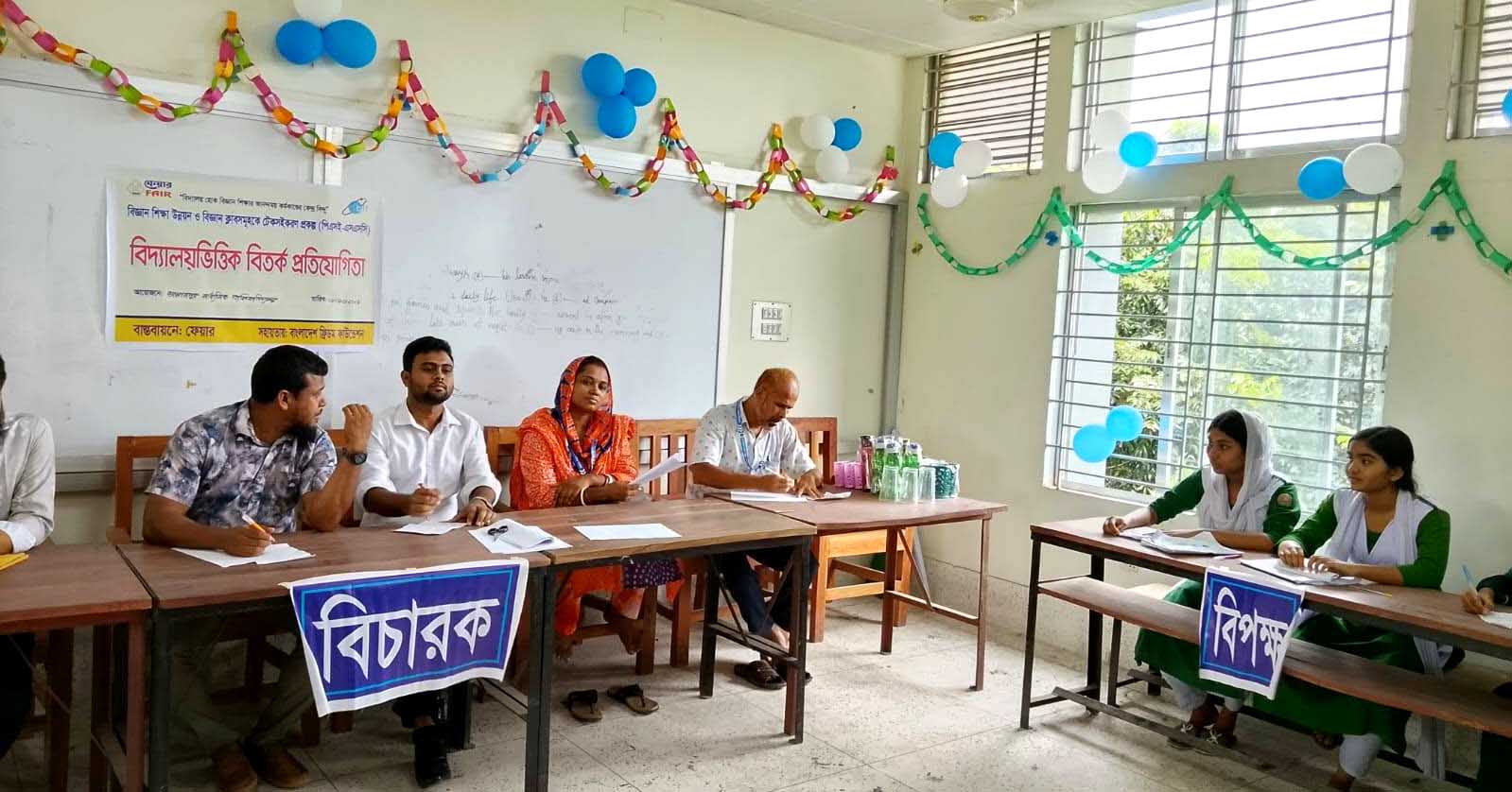
Introduction: Modernizing science education is essential for driving national progress. To energize the broader Science Education Movement in Bangladesh, addressing practical classroom barriers has become crucial. In fact, secondary school science often remains confined to textbooks and memorization.
Recognizing this reality, promoting science education in Bangladesh requires grassroots institutional models. Therefore, the human rights and development organization Friends Association for Integrated Revolution (FAIR) has established an action-oriented framework. Supported financially and strategically by the Bangladesh Freedom Foundation (BFF), the “Promoting Science Education and Strengthening Science Clubs (PSE-SSC)” project is actively transforming secondary education across southwestern Bangladesh. As a result, this initiative systematically replaces passive learning with hands-on inquiry, logical reasoning, and real-world experiments.
The primary engine driving this movement is the Sustainable Science Education Movement in Secondary School (SEMS) Forum. Specifically, it operates as a representative policy-making body of 33 members. This includes secondary school head teachers and three leadership representatives from FAIR. Furthermore, the forum unites schools across Kushtia Sadar Upazila to ensure structured permanence, local ownership, and long-term sustainability.
1. Structural Evolution: Expanding into Four Specialized Networks
To cultivate diverse branches of scientific inquiry, each partner school has replaced the traditional single science club. Instead, schools have formed four distinct, specialized student clubs:
- Science Club: A dedicated workspace where junior researchers explore nature observation, eco-friendly technologies, and practical innovations.
- Physics Club: A learning hub focused on testing physical mechanics, carrying out experimental demonstrations, and preparing for academic Olympiads.
- Math Club: A collaborative platform designed to build mathematical logic, solve complex equations, and develop analytical thinking skills.
- Debate Club: An open forum where students engage in sharp parliamentary debates, present evidence-backed arguments, and address contemporary scientific issues.
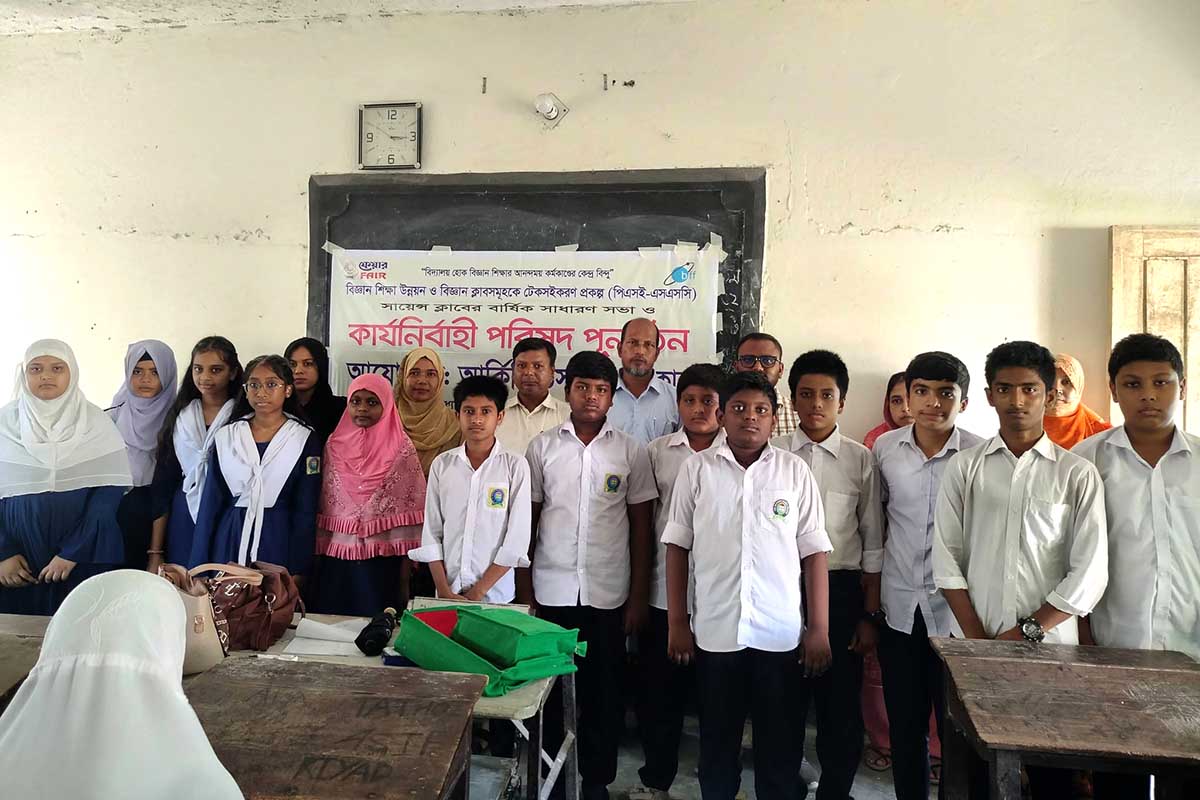
In addition, this integrated approach broadens participation beyond conventional science streams. Students from humanities and business studies now actively participate in math challenges and analytical debates alongside their science peers.
2. Local Ownership and Institutional Sustainability
The core strength of the SEMS initiative lies in self-reliance rather than perpetual dependence on external project staff. Therefore, to build genuine institutional endurance, participating schools have introduced a democratic governance framework:
- 15-Member Executive Committee: Each school’s head teacher serves as ex-officio president. In addition, one teacher serves as treasurer and another as a committee member. Students also take on key leadership roles, including vice president and general secretary.
- Dedicated Teacher Mentors: Every club works under the direct academic guidance of a designated mentor teacher who oversees sessions and event schedules.
- Autonomous Operational Planning: Through quarterly review meetings, head teachers, mentor teachers, and student representatives sit together. As a result, they plan their budgets, fix Olympiad dates, and organize publications independently.
- Independent Reserve Funds and Banking: To secure recurring financial stability, clubs collect a modest monthly subscription of 10 Taka from students. Furthermore, supported by local institutional contributions, each club is opening an independent bank account to build a permanent “Science and Education Fund.”
3. School-Based Festivals and Inter-School Collaboration
This structural reorganization has transformed school premises into active grounds for half-day and full-day science festivals. Consequently, energetic participation from both educators and students has brought fresh vitality to local campuses:
- Multi-Tier Olympiads: Subject-based competitions evaluate analytical capabilities across Physics, Mathematics, and General Science.
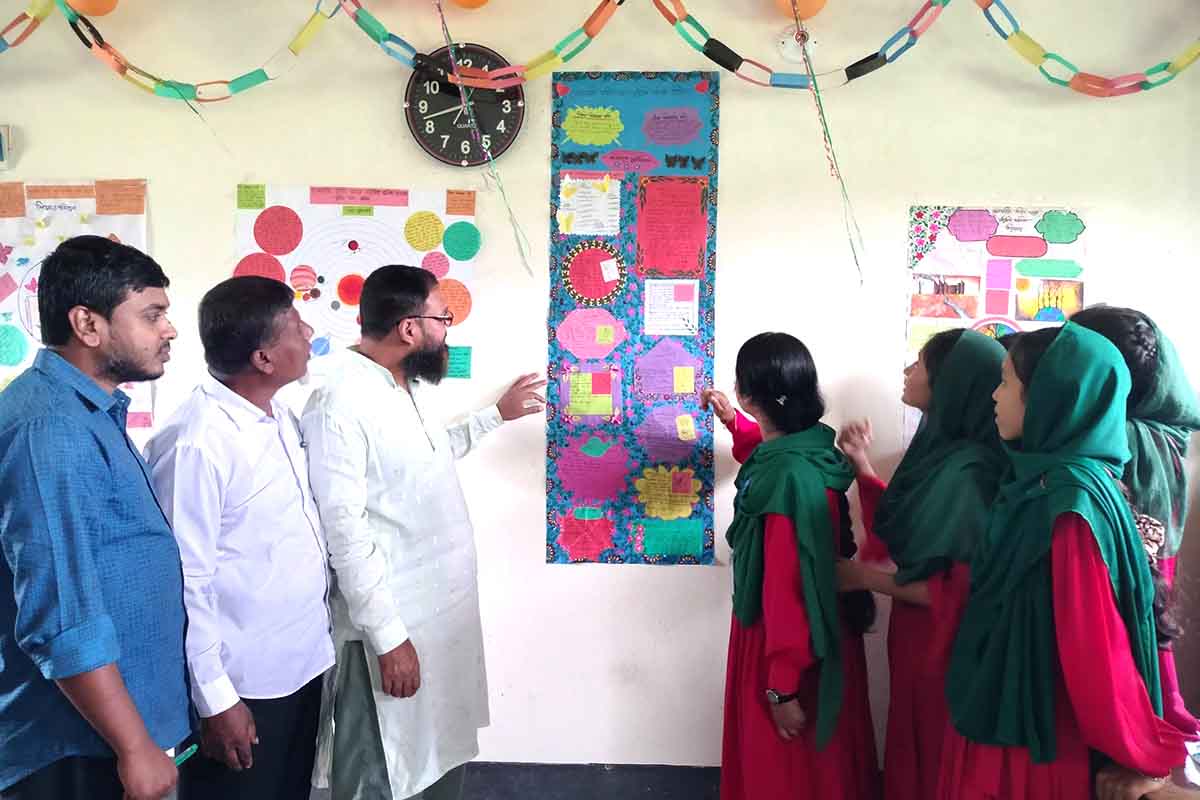
- Applied Project Exhibitions: Students demonstrate working prototypes addressing real-world concerns. For instance, projects showcase industrial pollution control, renewable energy alternatives, smart urban layouts, and public health systems.
- Scientific Wall Magazines: Student editorial teams regularly research and curate wall magazines and periodicals reflecting original scientific thought.
- Logic-Driven Debates: Parliamentary debate sessions give students structured platforms to challenge unscientific misconceptions with empirical evidence.
- Community Cultural Integration: Moreover, participating schools invite students and teachers from neighboring institutions. Seasonal traditional pitha festivals, welcoming decorations, and cultural performances turn these academic gatherings into vibrant community events.
4. Civic Responsibility and Environmental Action
The clubs also encourage students to apply scientific awareness directly to community welfare:
- Dengue Prevention and Campus Cleanliness: Student squads regularly inspect classrooms, playgrounds, and adjacent drains. Therefore, they successfully eliminate stagnant water and educate the surrounding community on vector-borne disease control.
- Biodiversity and Nature Observation: Guided field exercises teach young learners to identify local plant species. In addition, students monitor seasonal changes and understand environmental stewardship firsthand.
5. Cumulative Achievements and Demonstrated Impact
Consistent coordination across the network has produced substantial operational milestones in the field:
- Direct Student Engagement: In total, 769 students across partner schools have actively participated in science fairs, subject Olympiads, debate contests, and hands-on workshops.
- Institutional Governance Across 30 Schools: All 30 participating secondary schools have completed the formation of 15-member executive committees. As a result, they have established genuine school-level ownership.
- Regional and National Laurels: Systematic school-level training helped participants advance to the national round of the 12th Junior Science Olympiad. Meanwhile, student debaters claimed top honors in regional science debate championships.
- Expanded Practical Contests: The initiative has already conducted school-level science Olympiads for 426 students across 17 institutions. Furthermore, math and general knowledge quizzes engaged 144 students across 9 schools.
- Financial Foundations: Clubs are steadily accumulating their own “Science and Education Funds.” Consequently, regular subscriptions and independent accounts are leading them toward complete operational self-sufficiency.
Strategic Insights for Policy Makers and Development Partners
The secondary school network operating across Kushtia demonstrates that lasting science education cannot depend on isolated, one-off events. Instead, it requires local administrative ownership, democratic committees, and steady grassroots financing. When head teachers, subject mentors, and students jointly manage their own event budgets, practical scientific learning becomes an enduring institutional culture.
By transforming passive classrooms into energetic spaces of experimentation and inquiry, this framework offers a realistic, scalable blueprint. Ultimately, promoting science education in Bangladesh through institutional school clubs prepares young minds for a knowledge-driven future.