
School Science Club Sustainability in Bangladesh: SEMS Forum Kushtia
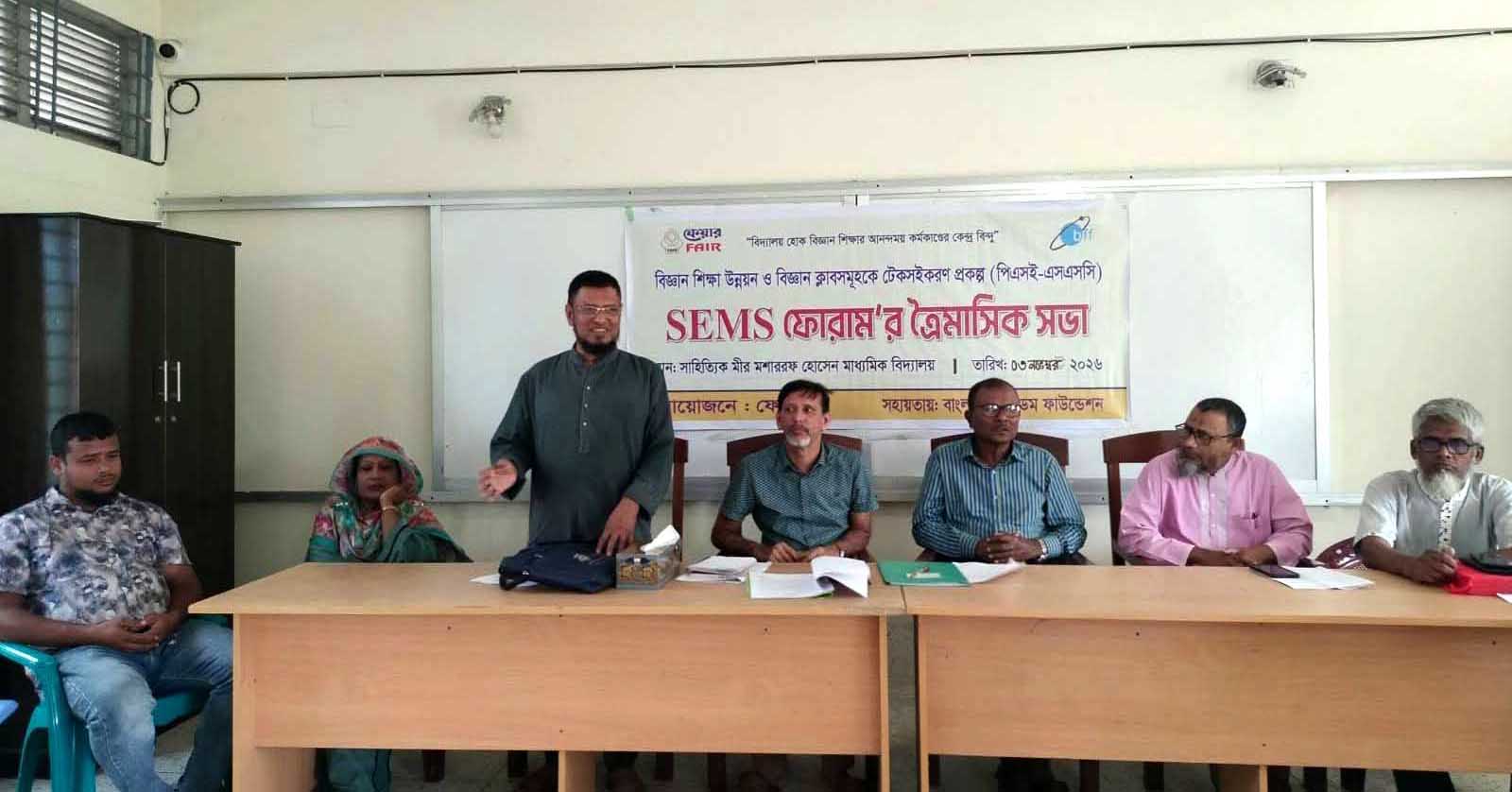
Secondary school educators across Kushtia are taking bold steps to strengthen science education. In fact, ensuring long-term school science club sustainability in Bangladesh has now become their top regional priority.
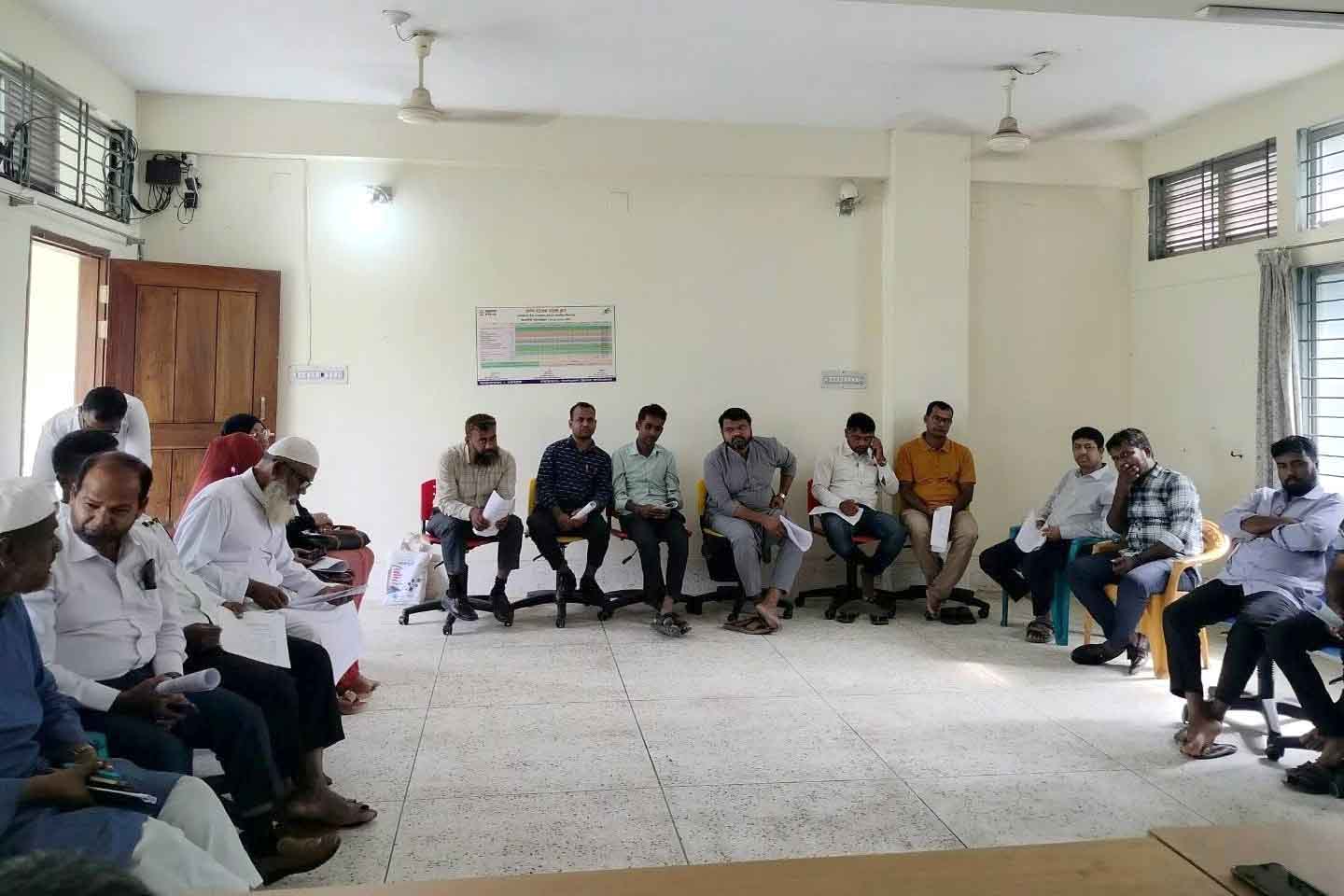
On 3 November 2026, educators gathered at the Sahityik Mir Mosharraf Hossain Secondary School auditorium. During this quarterly coordination meeting of the Secondary Education Management and Science (SEMS) Forum, members finalized a clear action plan. They decided to institutionalize 30 grassroots science clubs, launch dedicated reserve funds, and arrange district-level academic competitions.
The initiative is actively implemented by FAIR (Friends Association for Integrated Revolution) with institutional backing from the Bangladesh Freedom Foundation (BFF). Md. Nasir Uddin, head teacher of Ranjitpur Secondary School, presided over the session. In addition, Dewan Akhtaruzzaman, Director of FAIR and member secretary of the forum, moderated the discussion.
Strategic Priorities for School Science Clubs in Bangladesh
Educators emphasized that extracurricular science activities need a permanent administrative structure. Therefore, the assembly adopted several practical decisions to advance the Science Education Movement in Bangladesh:
- Formal Registration: The forum decided to complete government registration for 30 school science clubs in Bangladesh. Consequently, this step gives them an official legal identity.
- Bank Accounts: Each club will open an independent bank account. As a result, teachers and students can manage club funds transparently.
- Academic Events: Leaders also agreed to finalize venues for the upcoming Science Fair and Olympiad in Kushtia. These events will cover Physics, Mathematics, and General Science.
- Practical Learning: Furthermore, the forum established guidelines for nature observation camps, junior research projects, and science book reading circles.
Ensuring Long-Term Financial Sustainability
Securing steady funding is vital for every club. Speaking on institutional growth, Obaidur Rahman, finance secretary of FAIR, emphasized the importance of regular local financing:
“To achieve true school science club sustainability in Bangladesh, schools must move beyond ad-hoc event funding. Because of this, clubs must secure formal legal status and run transparent bank accounts. In addition, building reserve funds through community sponsorships and institutional fees is essential. Therefore, FAIR remains dedicated to guiding teachers with budgeting and financial governance.”
Head teachers and senior educators took part in the open discussion. The speakers included Md. Arifur Rahman, Md. Siraj Uddin Malitha, Md. Abdul Alim, Sharif Raja Abu Md. Golam Nur, and Md. Azadur Rahman. Besides them, Mir Firoza Bulbul, Md. Saidur Rahman, Shirin Akter, Prof. Md. Rezaul Karim, Md. Shafiqul Islam, Md. Abdul Hakim, and Md. Rabiul Haque also shared their insights.
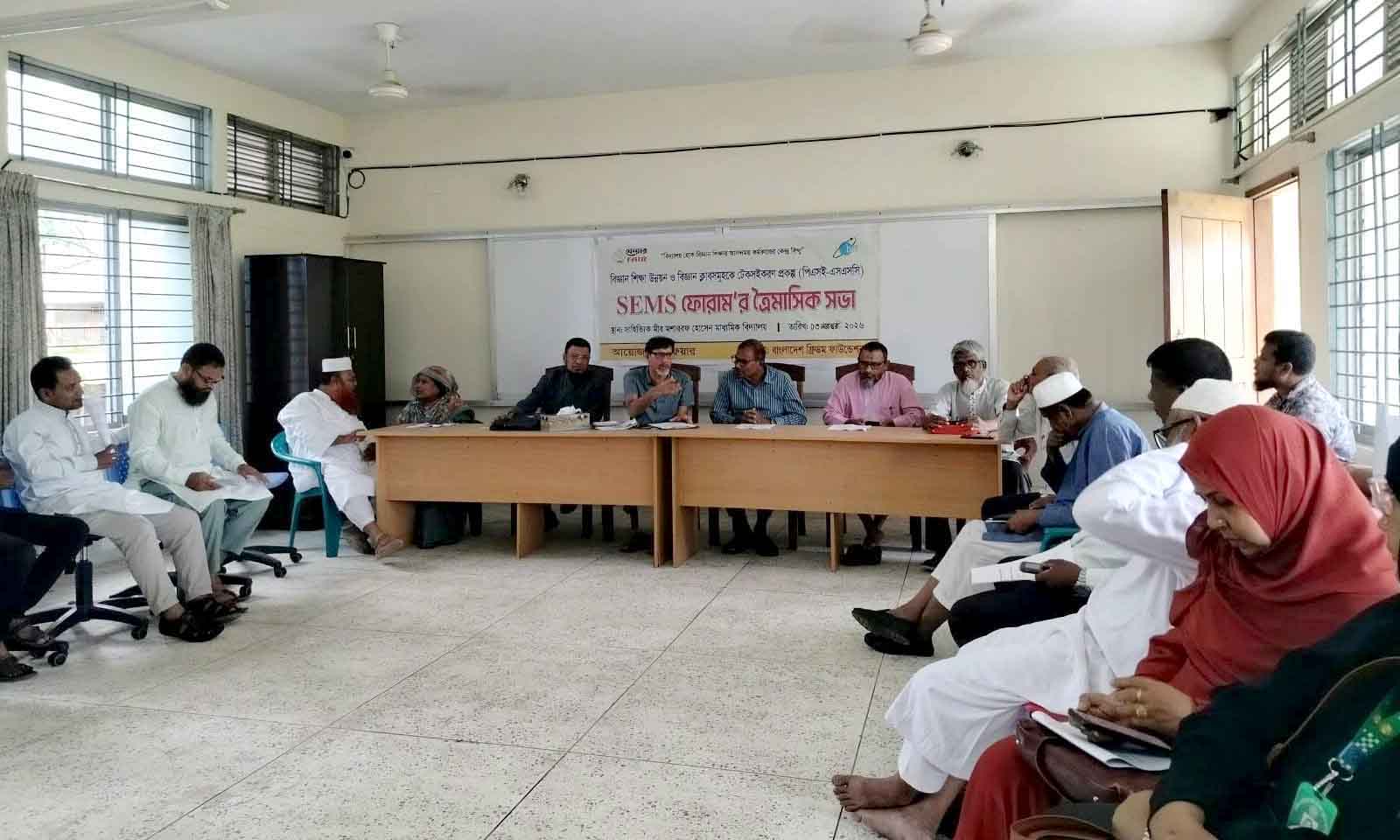
They jointly agreed that promoting science education in Bangladesh requires solving everyday classroom problems. Moreover, schools must publish student science magazines and gather steady community assistance for science laboratories.
In his closing speech, Md. Nasir Uddin praised the strong unity among local schools. He noted that regular collaboration through SEMS Forum Kushtia will turn secondary schools into vibrant hubs of practical inquiry. Consequently, this joint effort sets a dependable benchmark for school science club sustainability in Bangladesh.