
Science Education Mentor Coordination Meeting Bangladesh: Empowering 30 Schools in Kushtia
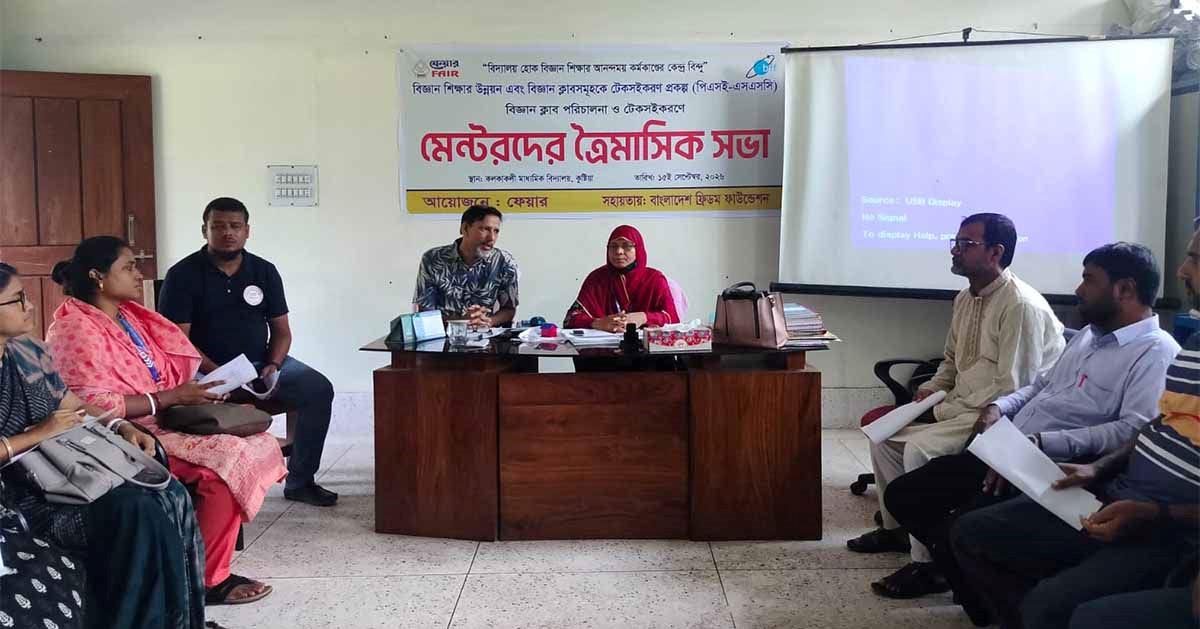
Kushtia | September 15, 2026: The first quarterly science education mentor coordination meeting Bangladesh was held at Kolkakoli Secondary School auditorium to strengthen school-based scientific inquiry. Organized by FAIR under the PSE-SSC project with support from the Bangladesh Freedom Foundation (BFF), Dhaka, the event brought together teachers from 30 institutions. This science education mentor coordination meeting Bangladesh focused directly on building long-term science club sustainability.
Addressing the session, Kolkakoli Secondary School Head Teacher Laila Yasmin emphasized active co-curricular engagement. She noted that dedicated mentorship is essential for promoting science education in secondary school classrooms. Despite faculty shortages and tight class routines, strong institutional commitment keeps student innovation alive.
Opening the working agenda, FAIR Director Dewan Akhtaruzzaman highlighted the project’s core objectives. He explained that making science engaging requires clubs to become self-reliant. He outlined a clear three-phase roadmap to guide schools toward full operational independence.
Project Officer Koushik Ahmed then shared practical operational guidelines through a multimedia presentation. He explained the procedures for bi-monthly sessions, academic olympiads, wall magazines, and local science education funds. These structured steps are designed to secure long-term science club sustainability.
The open floor segment addressed field-level challenges. Kolkakoli Secondary School teacher Hasanur Rahman discussed the pressure of balancing fixed class routines with extra science club activities.
Sharing an inspiring field experience, Jhaudia Bazar Secondary School teacher Md. Hafizur Rahman explained how proactive leadership resolves such barriers. He affirmed that keen interest from headmasters and science teachers ensures regular club operations and improves student performance.
Highlighting governance and operational discipline, Md. Ashraful Islam, Assistant Teacher of The Old Kushtia High School, stated, “We must emphasize strengthening the club constitution and institutional foundation. Continuous supervision and direct guidance from mentor teachers remain vital for sustaining students’ scientific thinking.”
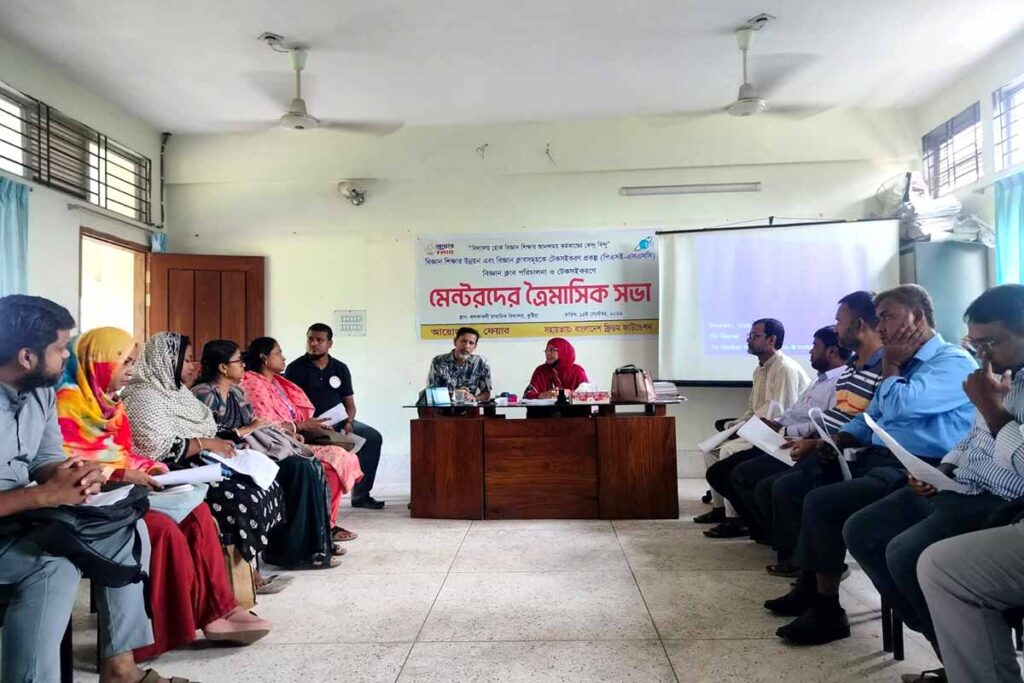
Focusing on gender inclusion, Md. Nazmul Hossain, Assistant Teacher of Baradi Secondary Girls’ High School, remarked, “Active science clubs in girls’ schools are encouraging young female students to step forward into innovative research, proving their capability and self-confidence across scientific forums.”
Addressing student engagement techniques, Biplob Hossain, Assistant Teacher of Mohini Mohan Bidyapith, noted, “Presenting complex textbook theories through simple, enjoyable experiments effectively eliminates science phobia and boosts students’ enthusiasm for scientific subjects.”
Sharing practical strategies on overcoming classroom disinterest, Mosammat Habiba Khatun, Senior Teacher of Begum Hamida Siddique School and College, added, “Initially, rigid textbook contents and rote learning created hesitation among students. However, this is not an insurmountable hurdle. Hands-on practical experiments, project designing, and science olympiads easily transform that initial reluctance into genuine curiosity.”
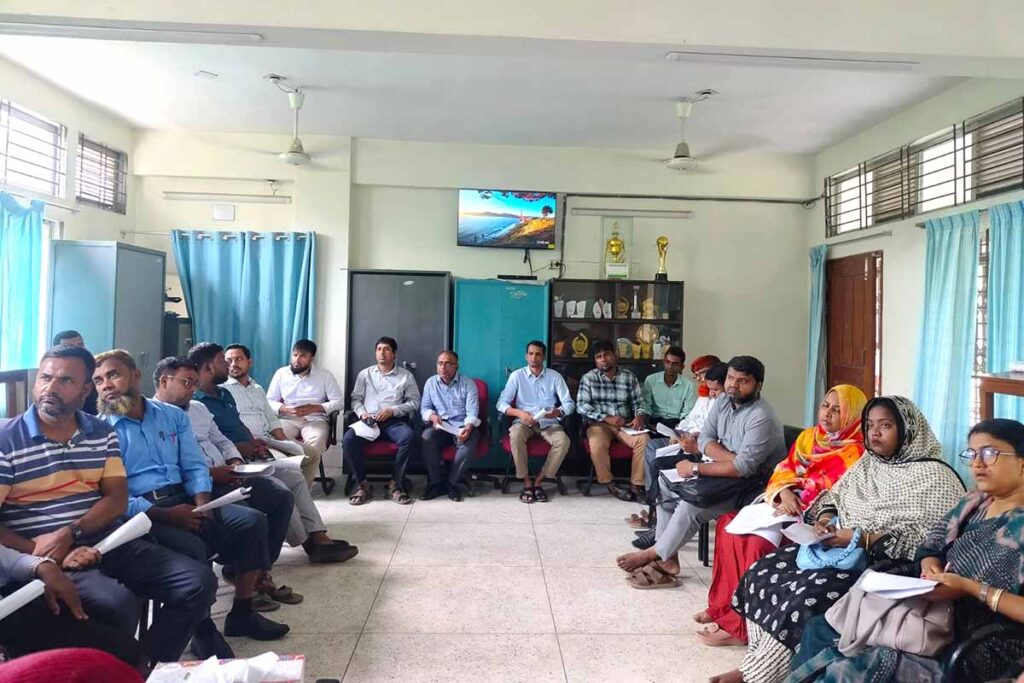
The participating teachers concluded the day by reaffirming their pledge to nurture critical scientific thinking across every campus. This science club sustainability meeting Kushtia served as an actionable science education mentor coordination meeting Bangladesh, establishing a reliable, inclusive benchmark for secondary youth education.